 EN
EN  لعربيّة
Reliable electricity is essential for businesses operating in Qatar. With rapid infrastructure expansion, increasing digital transformation, and high ambient temperatures, even a brief power interruption can disrupt operations, damage sensitive equipment, and lead to financial loss. Industries such as data centers, healthcare facilities, oil and gas plants, airports, telecom networks, and commercial towers depend on continuous and stable power.
To reduce downtime risks, organizations are investing in advanced Modular UPS systems supported by experienced Modular UPS distributors in Qatar. A professional company located in Qatar understands local grid conditions, climate challenges, and compliance standards.
This article explains what a Modular UPS system is, how it works technically, how it compares with traditional systems, and why choosing the right supplier is critical for protecting mission-critical operations.
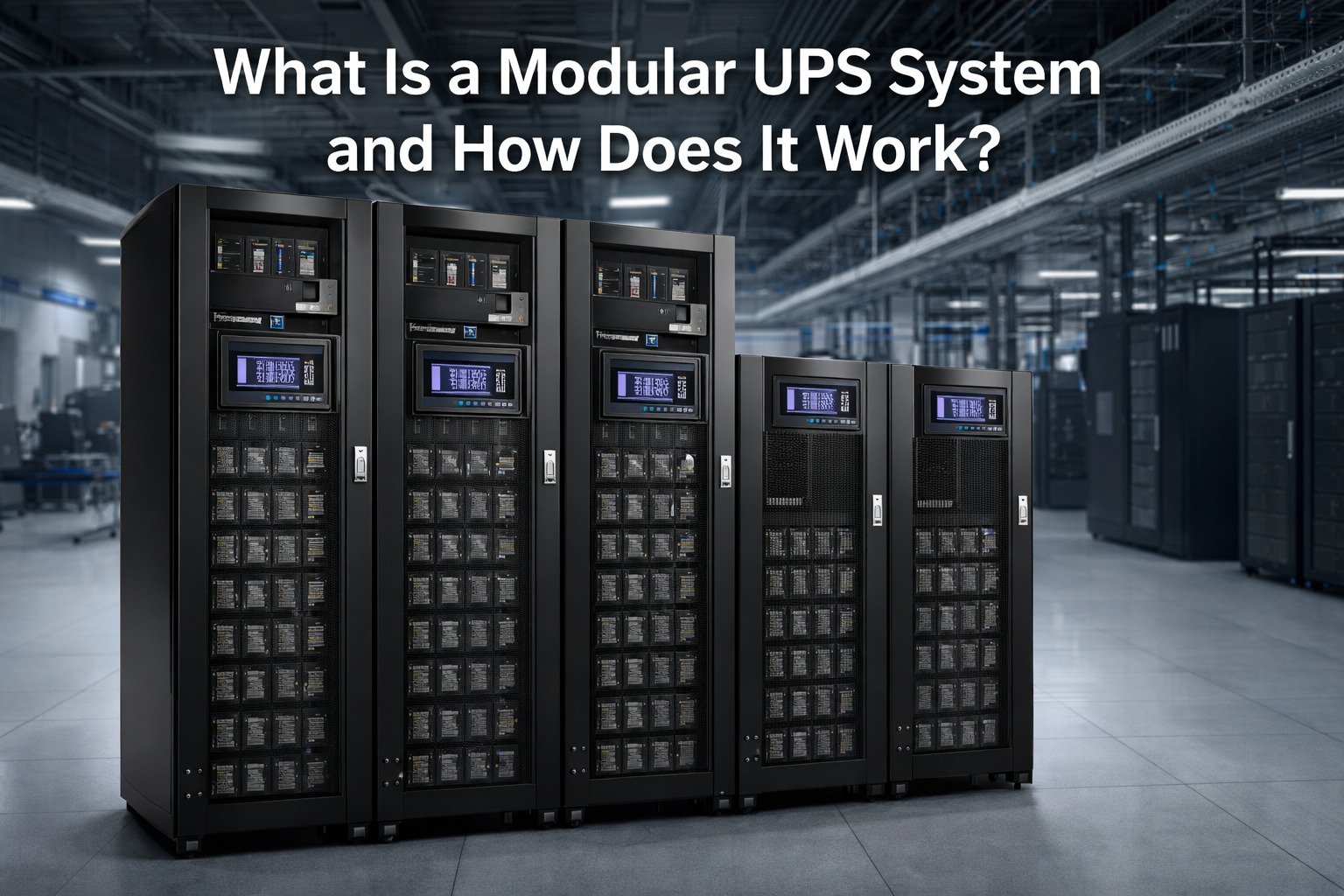
A Modular UPS system is an advanced type of Uninterruptible Power Supply designed with independent power modules operating within a single frame. Unlike traditional monolithic systems, modular architecture allows incremental expansion and built in redundancy.
In a conventional UPS, capacity is fixed. If load requirements increase, the entire system may need replacement. In contrast, modular systems allow additional power modules to be inserted as demand grows. This ensures scalability without major infrastructure changes.
Key characteristics include:
For expanding enterprises in Qatar, scalability is essential. From growing data center power backup needs to expanding industrial facilities, a Modular UPS system supports long term growth.
Built in redundancy also improves reliability. If one module fails, others continue supporting the critical load. This ensures stable power delivery to critical power infrastructure across multiple sectors.
A Modular UPS system ensures uninterrupted power through continuous power conversion and intelligent load sharing.
The rectifier converts incoming AC power from the utility grid into DC power. This DC power performs two functions:
Modern three-phase UPS systems improve energy efficiency and reduce harmonic distortion. This is especially important for large facilities in Qatar with sensitive electronic equipment.
Battery banks store DC energy for backup use. During normal operation, the rectifier maintains battery charge.
When utility power fails, the batteries immediately supply DC power to the inverter. This ensures zero transfer time and uninterrupted protection of the critical load.
Battery performance must be optimized for Qatar’s high temperature conditions. Proper thermal management extends battery life and enhances system reliability.
The inverter converts DC power back into clean AC output. This output powers servers, medical devices, telecom systems, and industrial machinery.
A high quality inverter maintains voltage stability and frequency regulation. This protects connected equipment from surges, spikes, and fluctuations.
In a Modular UPS system, multiple power modules operate in parallel. This is known as Parallel UPS architecture.
Each module shares the load proportionally. If demand increases, additional modules can be installed without shutting down operations. This architecture ensures scalability and higher availability.
Parallel redundancy improves system resilience and supports expanding infrastructure projects across Qatar.
N+1 redundancy means the system includes one additional module beyond what is required to handle the total load.x
If N modules are needed to handle the total load, one extra module serves as backup. If a module fails, the spare instantly supports the system. This approach enhances reliability and ensures continuous operation.
Experienced providers design systems with proper redundancy levels to match operational risk requirements.
A Modular UPS system consists of the following components:
Independent units containing rectifier, inverter, and control circuits. These are hot-swappable modules for simplified servicing.
Automatically transfers the load to utility power during internal faults or maintenance events.
Coordinates synchronization, load sharing, and redundancy management.
Houses battery banks that provide backup energy.
Includes a monitoring interface for real time diagnostics and performance tracking.
Connects with building management systems and power distribution units for centralized visibility.
Together, these components ensure reliable protection for mission critical operations.
Qatar’s ongoing industrial development and growing digital infrastructure demand reliable and flexible power protection.
Organizations can increase load capacity gradually by adding modules as operations expand.
Redundant power systems minimize downtime and protect essential services.
Advanced design improves efficiency across varying load levels, reducing operational costs.
Fault isolation ensures that a single module failure does not impact the entire system.
Hot-swappable modules allow maintenance without complete shutdown, simplifying UPS maintenance in Qatar.
Compact modular designs require less installation space.
Systems are engineered to operate reliably in high ambient temperatures.
Facilities can align power infrastructure with Qatar’s rapid infrastructure growth.
These advantages make modular systems ideal for critical facilities across the country.
| Feature | Modular UPS | Traditional UPS |
|---|---|---|
| Scalability | Expandable with additional modules | Fixed capacity |
| Redundancy | Built-in N+1 capability | Requires separate redundant units |
| Maintenance | Module-level servicing | Often requires full shutdown |
| Downtime Risk | Very low due to parallel architecture | Higher during faults |
| Long-term Cost | Optimized phased investment | Higher upgrade costs |
The performance of a Modular UPS system depends on proper engineering, installation, and long term support.
Selecting trusted Modular UPS distributors in Qatar ensures:
Several sectors depend heavily on advanced power protection:
Require reliable data center power backup to maintain uptime and protect digital assets.
Hospitals depend on uninterrupted electricity for life saving equipment.
Continuous monitoring and control systems demand stable redundant power systems.
Navigation, communication, and security systems require constant power availability.
IT systems, elevators, and security infrastructure require reliable supply.
Automation and production lines rely on stable load capacity.
Network infrastructure must operate without interruption.
These industries rely on experienced partners to design scalable and resilient backup systems.
A Modular UPS system offers scalable, energy efficient, and highly reliable power protection for mission critical operations. Its parallel architecture and N+1 redundancy ensure continuous operation even during component failure. By working with experienced UPS distributors in Qatar and partnering with a company located in Qatar, businesses secure long term reliability, professional support, and future ready critical power solutions tailored to local conditions.
A modular UPS consists of multiple independent power modules within a shared cabinet, allowing scalability and built-in redundancy. Traditional UPS systems are single block units with fixed capacity and limited expansion options.
A modular UPS system is highly scalable. Additional modules can be added as load requirements grow, making it ideal for expanding facilities and infrastructure projects.
N+1 redundancy means one additional module is installed beyond what is required. If one module fails, the spare module instantly supports the load, ensuring uninterrupted power supply.
Yes. Modular systems provide scalable UPS solutions, high availability, and energy efficiency, making them ideal for growing data center environments in Qatar.
حقوق النشر @ 2026. نيوميرك للتجارة والمقاولات. جميع الحقوق محفوظة | مدعومة من لغة تعريف الواجهة (IDL)